Top Hardware Add-ons for Your Vape Device to Boost Flavour
Ever taste someone else’s vape and think, “How the hell does theirs taste so much better?”
Premium e-liquid won’t fix flat flavour. Hardware is the problem. Most people buy expensive juice and wonder why it still tastes boring.
Coil choice, wattage, airflow, temperature – that stuff makes the difference. Not whether you spent $15 or $30 on juice.
Expensive juice in the wrong setup tastes worse than cheap juice dialled in right. Understanding vape accessories helps you build the right setup for maximum flavor.
Here’s what actually works. Beginner upgrades that don’t cost a fortune. Advanced techniques that work, but nobody talks about them.
Tech and prices change fast. This is 2025 info. Double-check before buying. Your results will be different.
Your hardware is killing your flavour, not your juice budget. Time to fix that.
Shop now in the #1 Online Vape Shop in Canada
We Ship Anywhere in Canada Including Quebec
Foundation Upgrades – Start Here for Immediate Flavour Gains
Basic components either help your flavour or kill it. No in-between.
Start with foundational upgrades. They give you the biggest flavour improvement for your money. Don’t get fancy until you fix the basics first.
Most people skip the boring upgrades and go straight for expensive coils or exotic wicking materials. Backwards approach. Fix your airflow, get your wattage right, and use proper coils. Then worry about the fancy stuff.
Your basic setup is probably holding back even premium juice. Fix that first.
Drip Tip Materials and Design – Beyond the Basics
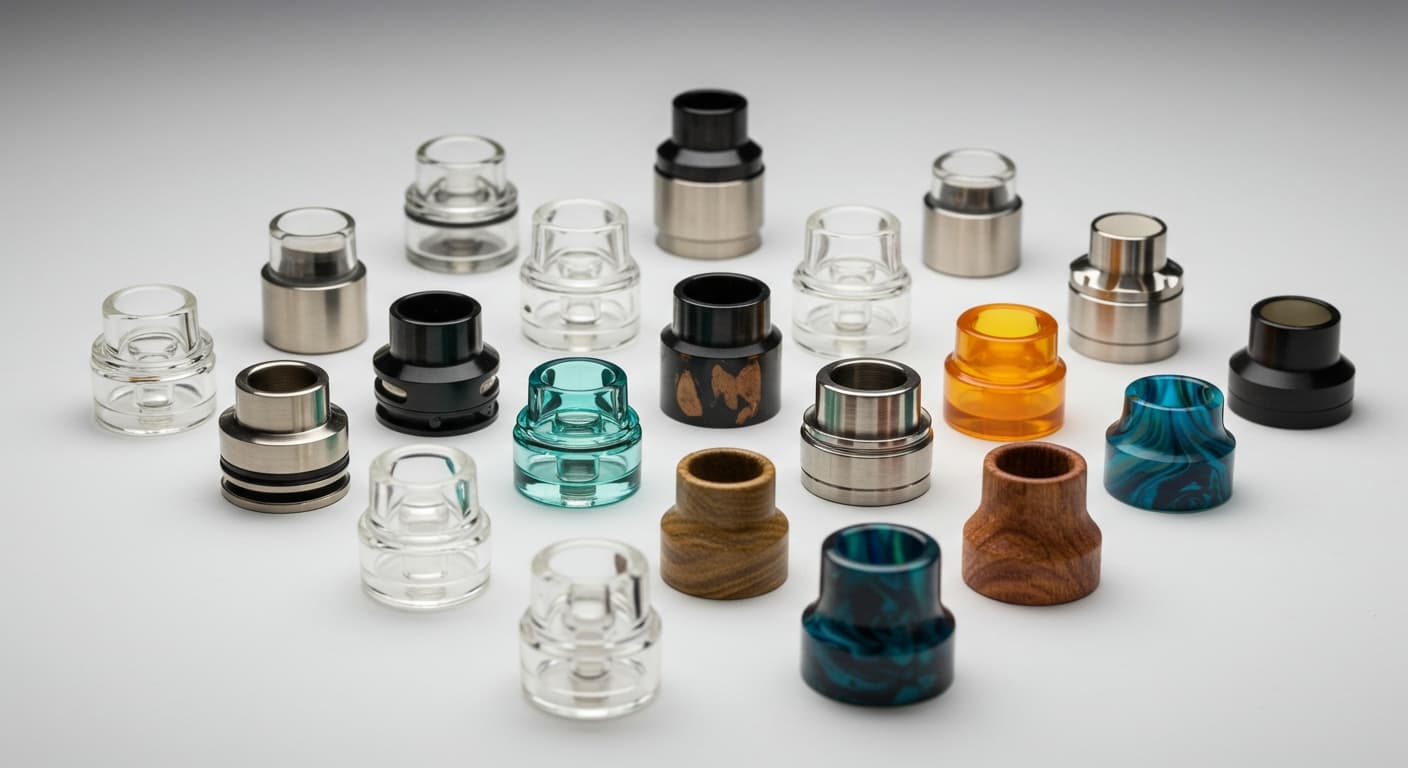
The material that touches your lips directly affects every flavour note you taste. Glass drip tips generally provide the cleanest flavour delivery because they don’t interact chemically with your e-liquid and don’t retain residual flavours from previous sessions. You’ll taste the difference immediately when switching from plastic to glass, especially with complex flavour profiles.
Stainless steel drip tips offer durability while maintaining relatively neutral flavour characteristics. They conduct heat more readily than glass, which can slightly warm your vapour, sometimes beneficial for dessert flavours that bloom at higher temperatures.
Bore diameter changes how concentrated your flavour hits. Different drip tips and mouthpiece designs offer various bore sizes for different vaping styles.
Narrow-bore tips (8-10mm inside) squeeze the airflow down. More intense flavour. Wide bore tips (12mm and up) let more air through. Cooler vapour, less flavour punch.
Trade-off between intensity and smoothness. Want flavour? Go narrow. Want smooth hits? Go wide.
Most people pick wide because it feels smoother, then wonder why their flavour is weak. Can’t have both. Pick what matters more to you.
Essential Coil Optimisation Strategies
Coil resistance changes how your juice vaporises and tastes.
Low resistance coils (0.2-0.6 ohms) heat up fast. Extract flavour aggressively. Hit you hard with taste.
Higher resistance coils (0.8-1.5 ohms) heat gently. Preserve subtle flavours better. Less punch, more nuance.
Most people opt for low resistance, thinking that more heat equals more flavour. Sometimes true, sometimes you just burn off the delicate notes you actually wanted to taste.
It depends on what kind of flavours you’re chasing and how your taste buds work.
Mesh coils often deliver superior flavour compared to traditional wire coils because they provide larger surface area contact with your wick. This increased contact area typically results in more even heating and fuller flavour extraction.
Coil positioning affects airflow interaction significantly. When air first hits the bottom half of your coil, it creates better cooling and more concentrated flavour delivery. Many vapers are unaware that adjusting the coil height by just a millimetre can significantly alter their flavour experience.
Regular maintenance becomes critical for consistent performance. Dry-burning coils every few days removes accumulated residue that mutes flavour.
Performance characteristics may vary based on individual setup combinations and usage patterns.
E-liquid Selection Science
VG/PG ratios change flavour delivery, not just cloud production.
Higher PG content (50/50 to 60/40) yields a better flavour. PG molecules bind to flavour compounds and deliver them to your taste buds.
Higher VG blends (70/30 and up) make bigger clouds but kill certain flavours. Light fruit profiles especially get muted. Dense vapour looks impressive but tastes weak.
Cloud chasers pick high VG and wonder why their strawberry juice tastes like nothing. Can’t have massive clouds and intense flavour. Pick one.
Base liquid quality varies significantly between manufacturers. Premium bases undergo additional purification that removes impurities that can interfere with flavour clarity. You’ll often notice this difference most clearly in simple flavour profiles where there’s nowhere for off-notes to hide.
Individual results vary significantly. Always verify current product specifications before purchasing.
Advanced Hardware Upgrades – Professional-Level Flavour Enhancement
Rebuildable territory is where flavour gets serious. Pre-built coils can’t compete with what you can build yourself.
More work? Yeah. More maintenance? Definitely. But the flavour difference is night and day once you figure out what you’re doing.
Most people are scared of building coils. Fair enough – it’s not plug-and-play like pod systems. However, if flavour is what you’re after, this is where you need to go eventually.
Rebuildable Atomizers for Ultimate Flavor Control
RDAs (Rebuildable Dripping Atomisers) typically provide the purest flavour experience because vapour travels directly from the coil to your mouth without passing through tank chambers that can dilute taste. You’ll need to drip e-liquid frequently, but the flavour clarity often justifies this inconvenience for serious flavour chasers.
RTAs (Rebuildable Tank Atomisers) balance convenience with performance by combining tank storage with rebuildable decks. Bottom airflow RTAs generally deliver better flavour than top airflow versions because air contacts coils more directly, though they’re more prone to leaking if wicked improperly.
Single coil configurations often produce more concentrated flavour than dual coil setups because all airflow passes over one heating element. Dual coils provide more vapour production, but flavour concentration may suffer.
Build deck size and chamber volume significantly affect flavour concentration. Smaller chambers concentrate flavour better, while larger chambers provide more airflow options.
Results vary based on individual building skills and maintenance practices.
Wicking Materials Deep Dive
Japanese organic cotton remains the gold standard for most applications because it provides neutral flavour and consistent wicking performance. Popular brands offer convenience through pre-formed strips, though they typically cost more than bulk cotton options.
Rayon wicks absorb e-liquid faster than cotton and withstand higher temperatures without burning. Many advanced builders prefer rayon for high-wattage applications or sweet e-liquids that tend to caramelise on cotton.
Ceramic wicking materials handle extreme temperatures without degrading, but wick more slowly than organic options. They’re best suited for specific applications like very thick e-liquids.
Wicking density dramatically affects both flavour and performance. Too little cotton creates flooding and gurgling; too much restricts juice flow and creates dry hits. The “just right” density comes through experience and varies by atomiser design.
Performance results depend on proper technique and compatibility with specific hardware.
Power System Impact on Flavour Quality
Your mod and battery setup affects flavour delivery more than most vapers realise. Power characteristics, voltage regulation, and temperature control all influence how effectively your coils extract flavour compounds from e-liquid.
Mod and Battery Selection for Flavour Enhancement
Regulated mods with stable voltage output typically provide more consistent flavour than mechanical alternatives because they maintain constant power regardless of battery charge level. Variable wattage lets you dial in power for different juices. Most flavour builds work best between 15-40 watts. Your coil setup changes that, though.
Temperature control stops dry hits and keeps flavour consistent. Steady coil temps mean your juice tastes the same hit after hit.
Most people ignore temp control. Their loss. Consistent temperature makes way more difference than they think.
When properly configured, TC can preserve delicate flavour notes that get burned off at excessive temperatures.
Battery discharge characteristics affect performance throughout their charge cycle. High-drain batteries (rated 20A or higher) maintain voltage better under load, providing more consistent flavour delivery.
Battery safety specifications and discharge ratings should be verified with manufacturers.
Wattage Optimisation by E-liquid Type
Dessert and bakery flavours often benefit from higher wattage settings (typically 25-45 watts) because heat helps release complex flavour compounds. Fruit flavours generally perform well at moderate power levels (typically 18-30 watts) where they maintain brightness without becoming harsh.
Menthol and cooling agents require careful power management because excessive heat can make cooling effects uncomfortable. Complex flavour blends need power adjustment based on their dominant notes.
Optimal settings vary significantly based on individual hardware combinations and personal preferences.
E-liquid Enhancement Techniques
Beyond hardware upgrades, how you prepare and handle your e-liquid dramatically affects flavour quality. These techniques cost nothing but time and can transform mediocre juice into exceptional experiences.
Steeping Methods for Maximum Flavour Development
Natural steeping means leaving juice in a cool, dark spot for 1-4 weeks. Let the flavour compounds blend and mature on their own. Takes patience but gives you the best results. Complex flavours like desserts and tobaccos need time to develop properly.
Stick sealed bottles in warm water for 15-30 minutes. Gets you weeks of steeping in a few hours. Not as good as natural steeping, but way faster.
Ultrasonic cleaner steeping uses sound waves to shake up the juice at the molecular level. DIY mixers swear by this method. Blends flavours fast and thoroughly.
Most people are too impatient for natural steeping. They grab fresh juice and vape it right away, then wonder why it tastes flat. Good juice needs time to reach its potential.
Gets you weeks of steeping in a few hours. Not as refined as natural steeping, but way faster.
Ultrasonic cleaner steeping uses sound waves to shake up the juice at the molecular level. DIY mixers love this method. Blends flavours thoroughly and fast.
Natural steeping wins for quality. Water bath wins for speed. An ultrasonic cleaner is somewhere in between.
Most people are too impatient for natural steeping. Their loss. Good juice takes time to reach its potential.
Steeping duration varies by flavour category. Simple fruit flavours may be ready in days, while complex dessert profiles often improve for weeks or even months.
Steeping timeframes vary based on the complexity of the flavour and personal preferences.
Storage and Handling for Flavour Preservation
Light kills flavour compounds over time. Fruit and floral notes get hit the worst.
Dark glass bottles protect way better than clear plastic. Temperature swings mess up flavour too. Keep your juice somewhere steady, not bouncing between hot and cold.
Most people store juice on windowsills or in cars. Then wonder why their strawberry juice tastes like cardboard after a week. Light and heat are flavour killers.
Dark closet, room temperature. That’s all you need for storage that actually preserves taste.
Air exposure should be minimised during storage because oxidation changes flavour profiles. Keeping bottles filled and caps tight prevents air contact that can mute flavours or create off-notes.
Storage conditions vary. Individual results may differ based on local climate and handling practices.
Professional Building Techniques and Advanced Methods
Advanced coil building and wicking techniques separate good flavour from exceptional experiences. These methods require practice but unlock performance levels impossible with pre-built options.
Coil Building for Flavour Optimisation
Wire material selection affects both flavour and performance characteristics. Kanthal provides neutral flavour and stable performance, but doesn’t work with temperature control. Stainless steel offers TC compatibility and slightly brighter flavour notes.
Coil geometry influences heat distribution and flavour development. Round wire provides even heating and easy building, while flat wire offers a larger surface area for improved flavour. Clapton coils combine both advantages but require more advanced building skills.
Coil spacing affects heat distribution. Contact coils heat more evenly but can develop hot spots, while spaced coils provide more even temperature distribution at the cost of slightly reduced flavour intensity.
Building skills develops through practice. Results vary based on individual technique.
Advanced Wicking Methods
Scottish roll technique involves rolling cotton fibres to create dense, uniform wicks that hold more e-liquid while maintaining proper capillary action. This method works particularly well in RDAs where frequent dripping can become inconvenient.
Pancake wicking for mesh coils requires specific cotton preparation to ensure full mesh contact without creating hot spots. Pancake wicking takes forever to get right. Don’t expect to nail it on your first try.
Wick length is different for every atomiser. RTAs are picky – too long and it floods, too short and it goes dry. Get it wrong and you’re rewicking constantly.
RDAs are way more forgiving. Mess up the length? Still works fine most of the time.
Your technique will be different based on your specific hardware. What works for one person might not work for you.
Most people give up after a few failed attempts. Their loss. Good wicking makes a huge difference once you figure it out.
Airflow and Environmental Optimisation
Environmental factors and airflow management significantly impact flavour delivery, yet most vapers overlook these aspects when troubleshooting flavour issues.
Airflow Control for Flavour Concentration
Restricted airflow concentrates flavour by forcing vapour through smaller passages, increasing vapour density and flavour intensity. However, restriction can also increase heat, which may overwhelm delicate flavour notes.
Open airflow provides cooler vapour and smoother draws, but can dilute flavour concentration. Many vapers prefer slightly restricted airflow for flavour while opening up for temperature management.
Bottom airflow typically provides better flavour concentration, while side airflow offers better leak resistance. Top airflow generally provides the least flavour concentration but maximum leak prevention.
Optimal airflow settings vary significantly based on individual preferences and hardware configurations.
Environmental Factors Affecting Flavour Performance
Temperature and humidity change how your vape tastes and feels. High humidity makes vapour feel thicker, more satisfying. Dry air makes everything harsh.
Ambient temperature screws with high-VG juice. Cold weather turns it into syrup. Your wicks can’t keep up. Have to adjust power or re-wick constantly.
Live somewhere with crazy weather swings? Good luck keeping your setup consistent. Summer to winter means completely different wicking and power settings.
Your location and season change everything. Some people are way more sensitive to this stuff than others.
Desert climate versus humid coast – totally different vaping experience with the same setup. Pain is something to deal with, but you learn to adjust.
Troubleshooting Guide – Solving Common Flavour Issues
Systematic troubleshooting helps identify whether flavour problems stem from hardware, technique, or e-liquid issues.
Diagnosing Flavour Problems
Muted flavour? Check your wick first. Probably oversaturated. Or your power is too low. Or your juice went stale sitting around for months.
Start with wick saturation, then bump up the power bit by bit. Don’t just crank it to max and hope for the best.
Off-taste means something’s contaminated. Previous flavours, old juice, dirty tank. Clean everything, including the new wick; try the juice you know tastes good. Process of elimination.
Inconsistent flavour? Wicking problems or your battery is dying under load. Check battery voltage when you’re actually hitting it, not just sitting there. Look for hot spots in your wick, too.
Your hardware setup changes everything. What works for troubleshooting one device might be useless for another.
Most people jump to buying new juice when their flavour goes wrong. Usually, the juice is fine. Your setup is the problem.
Maintenance Schedules for Optimal Performance
Daily stuff? Check your juice level. Make sure connections aren’t loose. Takes two seconds.
Weekly cleaning matters if you want flavour that doesn’t taste like yesterday’s mistakes. Dry burn your coils to get rid of gunk. Clean your tank properly, not just a quick rinse.
Monthly deep clean and coil replacement. Or whenever your coils taste burnt. Some people stretch coils for months. Gross.
How much maintenance you need depends on what you vape and how often.
Heavy vaping with sweet juices? You’ll clean way more often than someone using simple flavours occasionally. Sweet juice gunks up everything faster.
Most people skip maintenance until their flavour tastes terrible. Then act surprised when cleaning fixes everything.
Cost-Benefit Analysis and Upgrade Paths
Strategic upgrade planning maximises flavour improvements while managing costs effectively.
Budget-Friendly Upgrades with Maximum Impact
Entry-level improvements often provide the most noticeable flavour enhancement per dollar spent. Quality drip tips typically cost under $10-20 and deliver immediate improvements, while better wicking materials cost only a few dollars but dramatically affect performance.
Vape coil upgrades offer excellent value because they directly affect flavour production. Moving from basic coils to mesh designs typically costs $5-15 per replacement, but can transform your experience significantly.
Prices vary significantly by region and retailer. Always verify current pricing before purchasing.
Advanced Investment Options for Serious Flavour Chasers
High-end atomisers run $50-150. Worth it? It depends on how serious you are about flavour. Precision engineering sounds fancy, but some $30 clones work just as well.
Premium mods with advanced chipsets cost $80-200+. Temperature control, battery management, all the bells and whistles. Nice to have, but not essential for good flavour.
Complete rebuildable systems? $100-300+ to get started properly. Unlimited customisation sounds amazing until you realise you’ll spend months figuring out what works.
Don’t buy expensive gear until you know what you’re doing.
Seen too many people drop $200 on high-end gear, then use it like a basic setup. Complete waste of money. Learn the fundamentals first, then upgrade when you actually understand what you need.
Most “serious flavour chasers” are just gear collectors who can’t build a decent coil to save their life. Expensive doesn’t automatically equate to better flavour.
Building Your Upgrade Strategy
Logical progression typically starts with basic accessories before advancing to complex rebuilding. Compatibility planning ensures new components work together effectively. Testing methodology helps evaluate improvements objectively.
For vapers in the Brampton and Mississauga areas, Majestic Vapes offers extensive consultation services to help plan upgrade paths that match individual needs and budgets.
Individual progression rates vary significantly. Professional guidance may be beneficial for complex upgrades.
Shop now in the #1 Online Vape Shop in Canada
We Ship Anywhere in Canada Including Quebec
Your Flavour Optimisation Action Plan
Good flavour versus amazing flavour? Comes down to knowing how everything works together. Not just throwing money at expensive gear.
Start simple. Quality drip tips, maintain your coils properly, steep your juice right. Immediate improvements that don’t cost a fortune.
Then move to airflow optimisation, better power systems, and eventually rebuildables when you know what you’re doing. Biggest flavour improvements? Airflow characteristics, rebuildable atomisers, and proper steeping. Most people skip steeping completely. Their loss.
Here’s what gear reviewers won’t tell you: a well-tuned budget setup beats expensive gear configured wrong. Every time. Seen $300 setups that taste like garbage because the owner doesn’t understand basics.
Focus on understanding how each piece affects YOUR taste preferences. Don’t upgrade based on marketing hype or what some reviewer says is “game-changing.”
Starting with accessory swaps or planning complete overhauls? Take your time. Test systematically. Rapid changes teach you nothing and waste money.
Complex upgrades beyond your skill level? Get professional help. Places like our vape shop in Brampton know what actually works versus what sounds impressive. Saves time and prevents expensive mistakes.
This isn’t purchasing advice. Tech changes fast, compatibility changes, and your results will be different. Check current specs with manufacturers and experienced retailers. Don’t trust random internet advice for equipment decisions.