Sub-Ohm Vaping – A Complete Guide

Sub-ohm vaping has transformed the vaping landscape since it first emerged around 2014, and its popularity shows no signs of slowing down. Whether you’ve seen impressive cloud formations at a vape meet, watched cloud-chasing competitions online, or simply heard the term at your local vape shop, sub-ohm vaping represents a significant evolution in how people experience vaping.
Note: Nicotine is addictive. Vaping products are intended for adult smokers seeking an alternative to cigarettes. Sub-ohm vaping requires understanding of battery safety and proper equipment use. If you’re new to vaping, consider starting with a beginner-friendly device before advancing to sub-ohm setups.
At its core, sub-ohm vaping refers to using coils with electrical resistance below one ohm. This lower resistance allows more electrical current to flow through the coil, generating more heat and vaporising e-liquid more efficiently. The result is voluminous clouds, intensified flavour, and an experience that many vapers find more satisfying than standard vaping setups.
Standard vaping devices with higher-resistance coils produce a steady, moderate amount of vapour, which is perfect for many users. Sub-ohm devices increase the heat significantly, creating dense clouds that satisfy cloud chasers and flavour enthusiasts alike.
This guide covers everything you need to know about sub-ohm vaping, from the science behind it to advanced coil-building techniques. Whether you’re curious about upgrading from a pod system, interested in chasing massive clouds, or simply want to understand what the buzz is about, you’ll find the information you need here.
The Science Behind Sub-Ohm Vaping
Understanding the science behind sub-ohm vaping helps you make informed decisions about equipment, settings, and safety. The principles aren’t complicated, but grasping them will make you a better, safer vaper.
Three key concepts drive sub-ohm performance: electrical resistance, heat generation, and e-liquid composition. Each plays a critical role in determining your cloud production, flavour intensity, and overall experience.
Understanding Ohm’s Law
Ohm’s Law describes the relationship among voltage (V), current (I), and resistance (R) in electrical circuits: V = IR.
For vaping, this means that when resistance decreases (goes below 1 ohm), current increases. More current flowing through the coil generates more heat, which vaporises e-liquid more rapidly and efficiently. This is the fundamental principle that makes sub-ohm vaping produce larger clouds and more intense flavour.
Heat and Vapour Production
With sub-ohm coils, the low resistance means the coil heats up quickly, vaporising e-liquid more efficiently and producing larger, denser clouds. The increased heat also affects flavour delivery. Many e-liquid flavour compounds vaporise more completely at higher temperatures, releasing nuances that might remain muted at lower temperatures. This is why many vapers report that sub-ohm devices deliver richer, more complex flavour profiles.
The Role of VG and PG
Sub-ohm vaping works best with e-liquids high in Vegetable Glycerin (VG), typically 70/30 or 80/20 VG/PG ratios. VG is thicker and produces denser clouds, while Propylene Glycol (PG) carries flavour more efficiently and provides the throat hit many former smokers prefer.
The intense heat of sub-ohm devices complements high-VG liquids perfectly. The additional power can handle thicker e-liquids that might struggle to wick properly in lower-powered devices. At the same time, the increased vapour production makes the most of VG’s cloud-producing properties.
Types of Sub-Ohm Devices
The sub-ohm market offers several device categories, each with distinct advantages depending on your priorities. Some vapers prefer convenience, others want maximum customisation, and many fall somewhere in between.
Choosing the right device type is one of the most important decisions you’ll make as a sub-ohm vaper. Your choice affects everything from flavour quality to maintenance requirements to portability.
Sub-Ohm Tanks
The most popular choice for vapers venturing into sub-ohm territory. Sub-ohm tanks feature pre-made coils and offer user-friendly operation while still delivering impressive clouds.
Pre-made Coils: Available in various resistance levels, all below 1 ohm, eliminating the need for building.
Versatility: Many tanks allow switching between pre-made coils and rebuildable decks for those who want to experiment later.
Convenience: Large e-liquid capacity means less frequent refilling.
Rebuildable Dripping Atomisers (RDAs)
For hands-on vapers who want maximum control and the freshest flavour possible, RDAs offer an unmatched experience.
Direct Dripping: E-liquid dripped directly onto coils and wick delivers the freshest, most intense flavour.
Customisation: Build your own coils for complete control over resistance, heat, and vapour production.
Drip Frequency: Requires re-dripping every few puffs, part of the ritual that many enthusiasts enjoy.
Rebuildable Tank Atomisers (RTAs)
RTAs offer the best of both worlds: custom coil building with the convenience of a tank. You get RDA-level flavour and customisation without the need for constant dripping. These are ideal for vapers who want to build their own coils but need a more portable, convenient setup.
Sub-Ohm Pod Mods
The newest category combines pod system portability with sub-ohm power. These devices are smaller than traditional mods but capable of impressive cloud production. Many offer adjustable wattage and airflow settings, making them versatile options for vapers who want performance without bulk.
Regulated vs Mechanical Mods
Beyond atomiser choice, you’ll need to decide what powers your sub-ohm setup. The mod you choose determines your safety features, customisation options, and the learning curve you’ll face.
This decision is particularly important for sub-ohm vaping because lower resistance coils demand more from your batteries and device. Understanding the differences between regulated and mechanical mods is a matter of safety.
Regulated Mods – Best for Beginners
Regulated mods feature user-friendly interfaces, adjustable wattage, and built-in safety protections. They’re the recommended starting point for anyone new to sub-ohm vaping.
Built-in Protection: Electronic circuits prevent malfunctions, short circuits, and other safety hazards.
Consistent Output: Maintains steady power regardless of battery charge level.
Easy Adjustment: Simple wattage tweaking allows you to find the perfect setting for different coil resistances.
Quality Matters: Always choose mods from reputable brands to ensure safety features work as intended.
Mechanical Mods – Expert Territory
Mechanical mods lack electronic components, delivering raw battery power directly to the atomiser. They require a deep understanding of battery safety and Ohm’s Law.
Unregulated Power: Output decreases as the battery drains, requiring you to monitor performance.
Ventilation Critical: Proper venting prevents overheating and potential battery issues.
Short Circuit Prevention: Regular inspection is essential for safe operation.
Experience Required: Only for seasoned vapers who understand the risks and safety requirements.
Important: If you’re unfamiliar with Ohm’s Law and battery safety calculations, stick with regulated mods. The risks of mechanical mods are real, and safety should always be the priority.
Coil Materials and Configurations
The coil is central to any vaping setup, and this is especially true for sub-ohm devices. Your coil choice affects resistance, heat-up time, flavour delivery, and compatibility with different vaping modes.
Whether you’re using pre-made coils or building your own, understanding the available materials and configurations helps you optimise your experience. Different situations call for different coil characteristics.
Wire Materials
Different metals provide varying experiences, and choosing the right wire depends on your vaping style.
Kanthal: The most common choice. Durable, holds shape well, perfect for wattage mode. Ideal for beginners building their first coils.
Stainless Steel: Versatile for both wattage and temperature-control modes. Heats quickly. A great all-around option.
Nickel (Ni200): Temperature control only. Highly sensitive to heat changes. Never use in wattage mode.
Titanium: Also TC-only. Extremely heat sensitive. Like nickel, it should never be used in wattage mode.
Nichrome 80: Popular for DIY builds. Heats faster than Kanthal with slightly lower resistance per wrap.
Coil Configurations
Different coil setups offer distinct advantages for cloud production and flavour.
Single Coil: Uses less e-liquid and battery power. Offers a simpler building experience.
Dual Coil: Doubles surface area for more cloud and flavour production.
Parallel Coil: Two wires wrapped together create an expanded surface area. A single parallel coil can match dual micro coil performance.
Clapton/Twisted: Advanced builds with maximum surface area for intense flavour delivery.
Building Your Own Sub-Ohm Coils
Building your own coils offers customisation that pre-made options can’t match. You control every variable: resistance, ramp-up time, surface area, and heat distribution.
However, DIY coil building requires knowledge of Ohm’s Law and battery safety (see the Battery Safety section below). If you’re unfamiliar with these concepts or lack the proper equipment, stick with pre-made coils until you’ve thoroughly studied the fundamentals. The risks of improper builds are real. Shorts, battery stress, and even fires can result from careless building.
Essential Supplies
Before you start building, gather these essential tools and materials:
- Ohmmeter (for testing resistance, never skip this step)
- RDA or RTA of your choice
- Wire (24-gauge Nichrome 80 recommended for beginners)
- 1/8 drill bit or coiler jig for wrapping
- Ceramic-tipped tweezers (regular metal tweezers can short your coil)
- Wire cutters or nail clippers
- Quality wicking material (organic, unbleached cotton preferred)
- Screwdriver for securing leads
Step-by-Step Coil Building Process
Follow these steps carefully for a safe, functional build:
- Cut Wire: Start with a 12-inch strand. This gives you plenty to work with.
- Bend: Fold the wire in half with even lengths for symmetrical wraps.
- Wrap: Wrap around the drill bit or jig, keeping each wrap tight and neat against the previous one.
- Continue Wrapping: Complete five wraps total for typical sub-ohm resistance.
- Keep Drill Bit In: Maintain shape while positioning the coil for installation.
- Insert Leads: Place wire ends into post holes, ensuring the coil doesn’t touch the deck or posts.
- Secure Screws: Tighten post screws to hold the coil firmly in place.
- Check Spacing: Ensure wraps are evenly spaced with no overlaps or gaps.
- Test Resistance: Use an ohmmeter. Target 0.3-0.4 ohms for standard sub-ohm builds.
- Trim Excess: Cut off any wire protruding from posts.
- Fire and Adjust: Pulse fire button, compress with ceramic tweezers until coil glows evenly from centre outward.
- Re-check Resistance: Verify ohms after adjustments. Resistance may change slightly.
- Wick: Thread cotton through the coil. It should be snug but not so tight that it distorts the coil shape.
- Saturate and Vape: Drip e-liquid onto wick, let it fully absorb, then enjoy.
For advanced users comfortable with lower resistances, dual parallel coils at 0.15-0.20 ohms offer exceptional performance. However, this requires high-quality batteries and proper safety knowledge.
E-Liquids for Sub-Ohm Vaping
Your e-liquid choice dramatically affects your sub-ohm experience. The wrong e-liquid can cause wicking problems, harsh throat hits, or disappointing flavour, while the right choice elevates everything.
Sub-ohm devices have specific e-liquid requirements that differ from pod systems and MTL setups. Understanding these differences helps you avoid common mistakes and get the most from your device.
VG/PG Ratios
The ratio of Vegetable Glycerin to Propylene Glycol determines cloud density and throat hit.
70/30 VG/PG: The standard sub-ohm ratio. Excellent cloud production with good flavour delivery.
80/20 VG/PG: Maximum cloud production for dedicated cloud chasers.
50/50: A balanced option providing more throat hit. Still works for sub-ohm but produces less vapour.
Nicotine Levels
Sub-ohm devices produce more vapour per puff, delivering more nicotine with each inhale. Most sub-ohm vapers use 3mg or 6mg nicotine, with some preferring 0mg for pure flavour enjoyment. Higher nicotine levels (12mg+) can be overwhelming and harsh with sub-ohm devices. If you’re transitioning from higher-nicotine pod systems, plan to step down gradually.
Note about salt nicotine: While nicotine salts offer smoother throat hit and faster absorption, they’re typically designed for lower-powered devices. Use caution with salt nic in sub-ohm setups, as the rapid nicotine delivery can be overwhelming.
Flavour Profiles
Certain flavour categories perform particularly well under sub-ohm conditions.
Desserts and Creams: Rich custards, cakes, and bakery flavours develop complexity under sub-ohm heat.
Fruity and Fresh: Crisp fruit blends offer a refreshing contrast to warm vapour.
Menthol and Ice: Cooling sensations balance beautifully with sub-ohm warmth.
Tobacco Blends: Complex tobacco notes with honey, caramel, or vanilla undertones.
Storage Tip: Keep e-liquids in cool, dark places. Some complex flavours benefit from steeping. Letting them sit for a week or two can deepen and blend flavour notes.
Mastering Cloud Production
Cloud chasing is both an art and a science. While equipment matters, technique and knowledge play equally important roles in producing impressive vapour.
Whether you’re competing in cloud competitions or simply want to enjoy denser, more satisfying clouds, understanding the factors that influence vapour production helps you optimise your setup and technique.
The Foundation
Producing impressive clouds involves an interplay of several factors.
Airflow: Wide-open airflow allows vapour to accumulate and condense, creating denser clouds.
Wire Gauge: Thicker gauge wire retains more heat for efficient, sustained vaporisation.
Coil Diameter: A 3mm inner diameter provides balanced surface area for most builds.
High-Quality Batteries: High-drain batteries with adequate continuous discharge ratings ensure consistent power delivery.
Direct-to-Lung (DTL) Technique
Unlike mouth-to-lung (MTL) vaping that mimics the cigarette experience, DTL draws vapour straight into your lungs for maximum cloud production.
- Take a slow, deep breath while activating your device
- Fill your lungs from the bottom up, like taking a deep breath of fresh air
- Keep airflow wide open for dense vapour intake
- Exhale smoothly to maintain cloud shape and density
Practice tip: Start with moderate wattage and work your way up as you get comfortable with DTL breathing. Jumping straight to high wattage can cause coughing fits.
RDA Tips for Maximum Clouds
For cloud chasers using RDAs, a few additional considerations apply.
Fresh Drips: Re-drip before each session for optimal wick saturation.
Coil Positioning: Position coils to maximise airflow contact.
Build for Your Goals: Lower resistance builds produce more heat and vapour, but require appropriate battery selection.
Wattage, Voltage, and Temperature Control
Your device settings directly control the vaping experience. Too low and you get weak, unsatisfying vapour. Too high and you risk burnt coils and harsh hits.
Understanding how wattage, voltage, and temperature control interact helps you dial in the perfect settings for any coil and e-liquid combination. These three variables form the control system for your sub-ohm experience.
Wattage
Higher wattage produces more vapour but drains the battery faster and can shorten coil life. Start low and increase gradually. Exceeding your coil’s recommended range can cause a burnt taste and permanently damage the coil. Most sub-ohm coils operate best between 40 and 100 watts, depending on resistance.
Finding your sweet spot: Begin at the low end of your coil’s recommended range and increase by 5 watts until you find the balance of vapour production, flavour, and warmth that suits you.
Voltage
Voltage and wattage are interconnected through Ohm’s Law. Many regulated mods adjust voltage automatically based on wattage settings. Higher voltage means thicker clouds but faster battery drain. Understanding this relationship helps you predict battery life and performance.
Temperature Control (TC)
TC mode sets a maximum coil temperature, preventing dry hits and extending coil life. This mode requires compatible wire materials: nickel, titanium, or stainless steel.
- Set your preferred temperature (typically 400-500°F / 200-260°C for most vapers)
- Adjust the wattage to control how quickly the coil reaches that temperature
TC mode is particularly useful for preventing burnt hits when your tank is running low.
Battery Safety Essentials
Battery safety is non-negotiable in sub-ohm vaping. Lower resistance draws more current from your batteries, and improper handling can lead to serious consequences, including fires and explosions.
Taking battery safety seriously protects you, your property, and the people around you. The few extra minutes spent on proper battery care are always worth it.
Choosing the Right Batteries
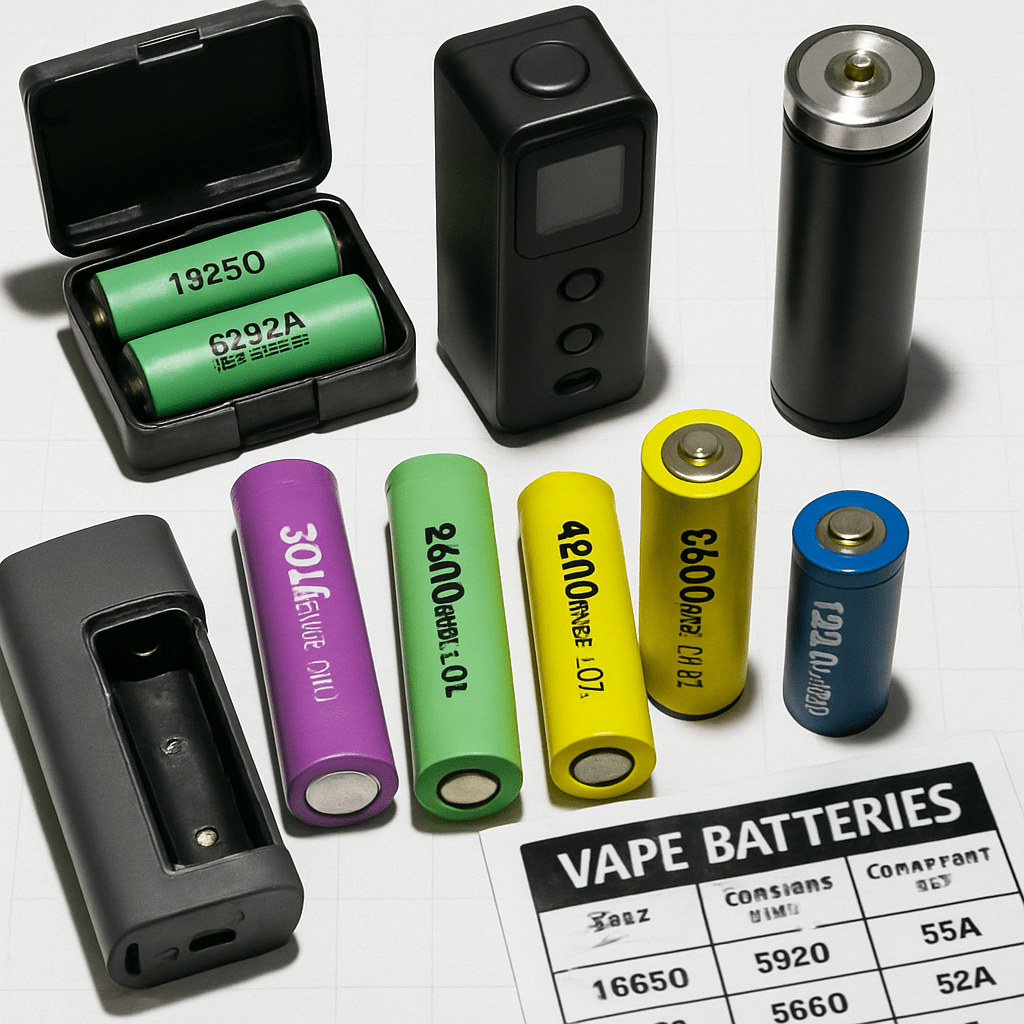
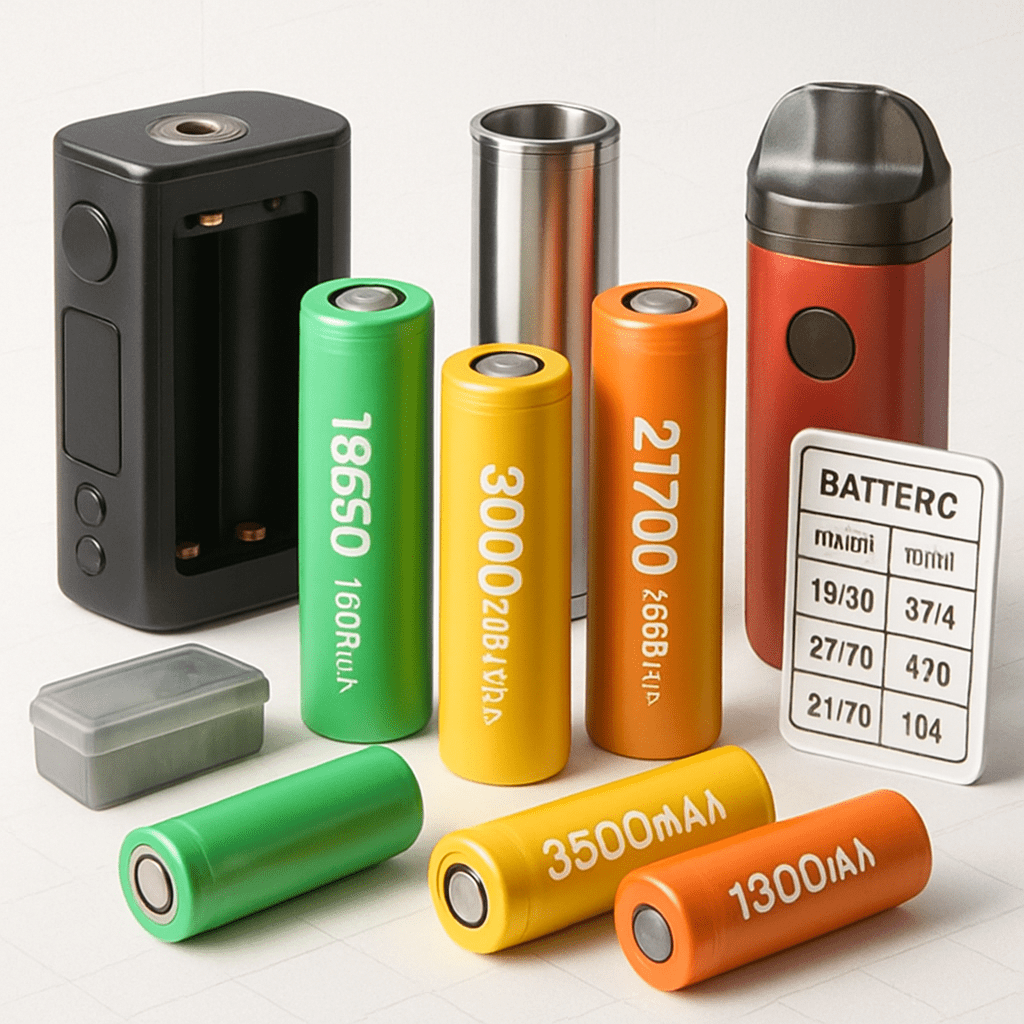
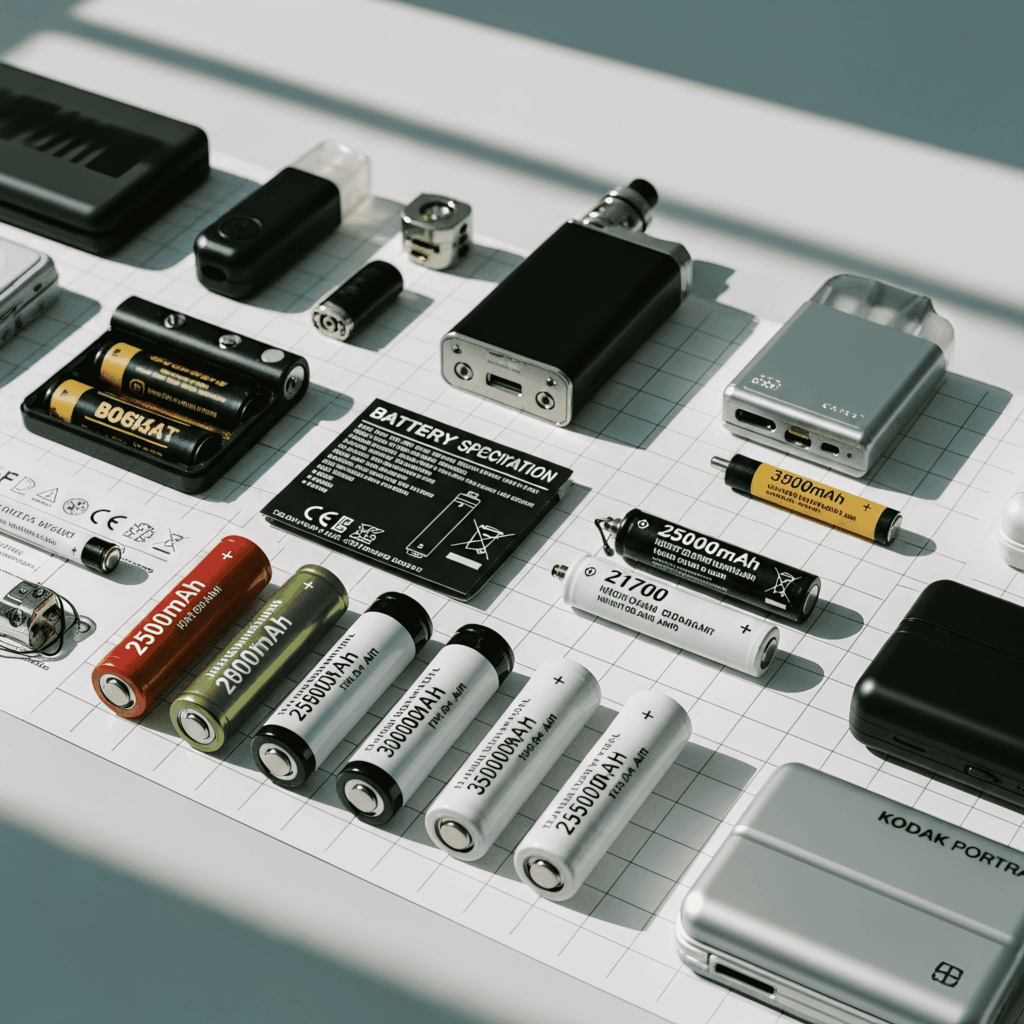
18650 batteries are the gold standard for sub-ohm vaping. They’re reliable, powerful, and widely available. Always purchase from trusted vendors to avoid counterfeits, which are disturbingly common. Look for reputable brands (Samsung, Sony/Murata, LG, Molicel) with high continuous discharge ratings (CDR) appropriate for your build’s amp draw. Majestic Vapes carries authentic batteries from trusted manufacturers, ensuring you get reliable performance and genuine safety ratings.
Regular Inspection
Make battery inspection part of your routine.
Check Battery Wraps: Look for tears, peeling, or exposed metal. These are immediate red flags requiring rewrapping or replacement.
Thermal Feedback: An unusually warm or hot mod signals potential issues. Stop using immediately and investigate.
Avoid Over-Draining: Recharge before hitting zero to extend battery lifespan and maintain safety.
Safe Storage: Use battery cases for transport. Loose batteries can short-circuit against metal objects like keys or coins.
Calculating Safe Limits
For mechanical mod users or those pushing regulated mods: Divide your battery’s CDR by your coil’s resistance to determine amp draw. Never exceed your battery’s continuous discharge rating. When in doubt, build higher resistance or use a regulated mod with built-in protections.
Coil Maintenance and Troubleshooting
Even the best equipment requires maintenance, and knowing how to diagnose problems saves time, money, and frustration. Most sub-ohm issues have straightforward solutions once you identify the cause.
Regular maintenance extends coil life and ensures consistent performance. Troubleshooting skills help you quickly resolve issues when they arise.
Common Issues and Solutions
| Problem | Cause | Solution |
| Spitback | Over-primed coil or flooding | Shake the device wrapped in tissue, increase wattage slightly |
| Dry Hits | Wicking issues or chain vaping | Prime coil properly, take breaks between puffs, lower wattage |
| Leaking Tank | Faulty O-rings or improper assembly | Check and replace O-rings, ensure coil is seated correctly |
| Battery Draining Fast | High wattage or low resistance build | Carry spare batteries, use high-drain cells, reduce wattage |
| Low Vapour Production | Insufficient wattage or worn coil | Increase wattage within coil range, replace old coils |
| Burnt Taste | Wattage too high or coil end-of-life | Lower wattage, replace coil, prime new coils thoroughly |
| Muted Flavour | Coil gunked up or vaper’s tongue | Clean or replace coil, stay hydrated, rotate flavours |
When to Replace Your Coil
Replace coils when you notice:
- Visible discolouration or dark buildup on the coil
- Gunked residue that doesn’t clean off
- Reduced vapour production despite proper settings
- Muted or off-tasting flavour
Coil lifespan varies based on e-liquid sweetness (sweeteners gunk coils faster), wattage levels, and usage frequency. Most vapers replace coils every 1-3 weeks.
Common Sub-Ohm Myths Debunked
Misinformation about sub-ohm vaping persists despite years of community experience. Clearing up these myths helps newcomers make informed decisions and experienced vapers correct misconceptions.
Myth: Sub-ohm vaping is only for experts.
Reality: With proper guidance and safety precautions, even beginners can enjoy sub-ohm vaping. Regulated mods with pre-made coils provide a safe, accessible entry point. You don’t need to build your own coils or understand advanced electronics to enjoy the benefits of sub-ohm vaping.
Myth: Sub-ohm vaping means higher nicotine intake.
Reality: By choosing appropriate nicotine levels (3-6mg or even 0mg), you control your intake completely. Many sub-ohm vapers actually use lower nicotine concentrations than pod system users because of the increased vapour production. It’s about volume, not concentration.
Myth: Bigger clouds mean better flavour.
Reality: Cloud size and flavour intensity don’t always correlate directly. Airflow settings, coil design, and e-liquid quality all affect flavour independently of cloud production. Some flavour-focused builds prioritise taste over vapour volume.
Find Your Sub-Ohm Setup at Majestic Vapes
Majestic Vapes offers a complete selection of sub-ohm devices, tanks, coils, and high-VG e-liquids. Whether you’re upgrading from a pod system or exploring coil building, our staff can help you find the right setup for your goals and experience level.
Visit us in Brampton or Mississauga, or shop online at majesticvapes.ca.
Reminder: Vaping products contain nicotine, which is addictive. These products are intended for adult use only. Sub-ohm vaping requires proper battery handling and safety knowledge. Always use appropriate equipment and follow manufacturer guidelines.